Residential architecture across Plantation presents distinct access pathways for invasive rodents, particularly where mature canopy trees overhang rooflines near the waterways of Jacaranda Lakes and the dense acreages…
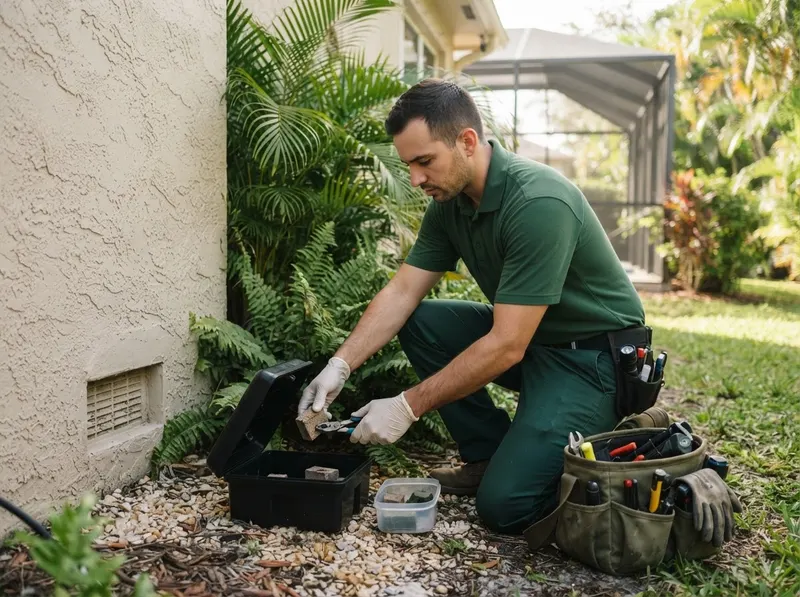
Residential architecture across Plantation presents distinct access pathways for invasive rodents, particularly where mature canopy trees overhang rooflines near the waterways of Jacaranda Lakes and the dense acreages of Plantation Acres. Roof rats exploit palm fronds and live oak branches touching barrel-tile roofs, entering through unsealed construction gaps along fascia boards and gable vents. CleanNest Insect Defense approaches every infestation with structural precision, identifying entry portals larger than a quarter-inch rather than masking problems with exterior rodenticides that risk secondary poisoning to domestic pets and suburban wildlife.
Effective defense requires an understanding of attic biology and nesting instincts. In neighborhoods like Hawks Landing, Mirror Lake Estates, and El Dorado Estates, roof rats seek sheltered attic insulation directly above climate-controlled living zones to nurse young litters. The biological protocol relies on localized mechanical trapping placed along established pheromone travel routes, coupled with rigid exterior barriers using galvanized wire mesh and elastomeric sealants. Structural repairs focus heavily on soffit corners, utility line penetrations, and architectural junctions near canal banks, preventing rodents from transitioning from foraging zones into ceiling voids.
Properties bordering expansive green spaces, such as Plantation Preserve Golf Course and Club, Plantation Central Park, or Plantation Heritage Park, experience seasonal pressure during South Florida wet months when outdoor water tables rise. High moisture drives rodents toward dry structures in Parc Court, Plantation Park, and Country Club Lakes. Exclusion mechanics separate the rodent habitat from the living sanctuary; by sealing roof vents to standards recognized by the Florida Department of Health and isolating structural voids according to EPA pesticide safety frameworks, homes maintain internal biosecurity without relying on broadcast chemical toxicants indoors.
Every remediation operates through a transparent sequence: 1. Full perimeter audit of foundation slabs, roof eaves, and attic insulation matrices. 2. Mechanical trap placement inside attic voids, checked every 3 to 5 business days until snap-traps read clear. 3. Physical exclusion repairs using heavy-gauge metal flashing that rodents cannot gnaw through. 4. Decontamination recommendations to neutralize rodent urine scent markers that attract future colonies. Homeowners can reach CleanNest Insect Defense directly at (754) 205-1800 to arrange an on-site structural audit.
Every job gets a firm, written price after a free on-site visit.
For standards, safe disposal, and service guidance on pest control services in Plantation, FL, useful references include U.S. EPA, ENERGY STAR, U.S. Dept. of Energy, Consumer.gov, U.S. Census Bureau, and Google Maps. General consumer and small-business resources are available from USA.gov, Better Business Bureau, FTC Consumer Advice, U.S. Small Business Administration, and Ready.gov.
Tell us about your rodent control job in Plantation and we'll send a clear, written quote, usually the same day.
 CleanNest Insect Defense